
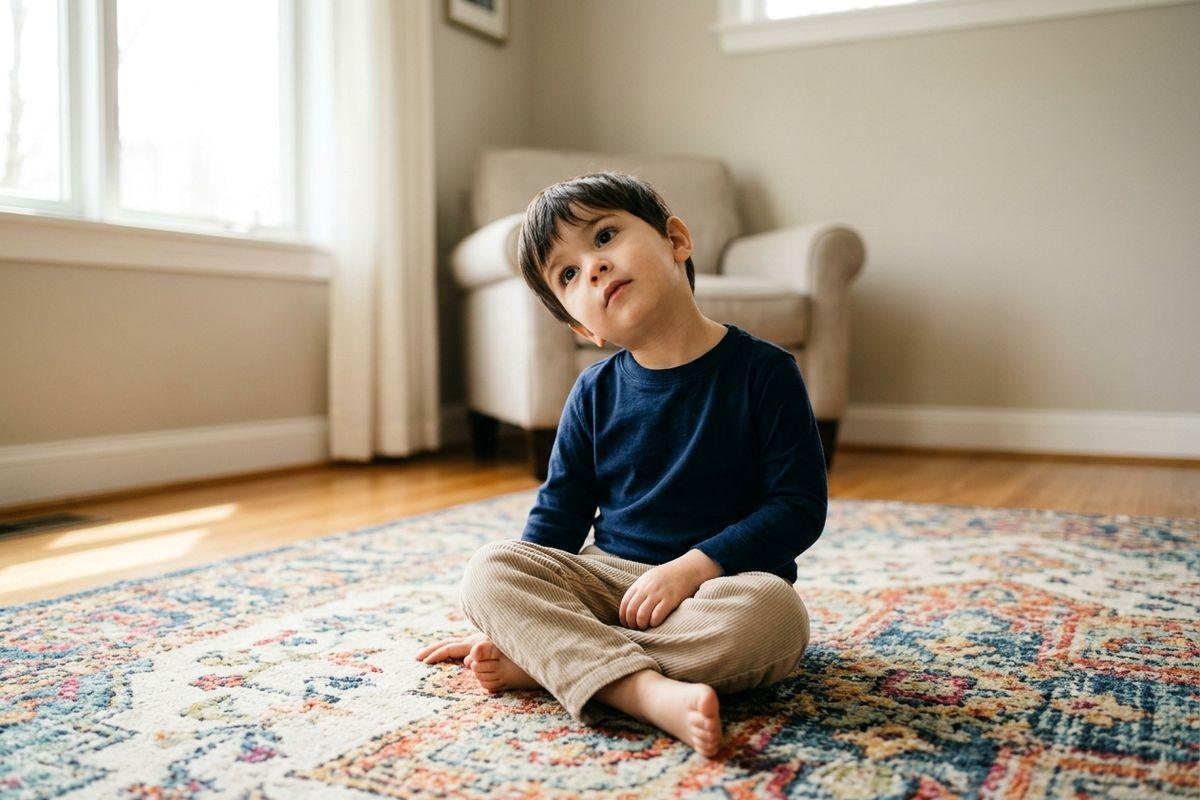
Toddlers pick up all sorts of strange little habits, and most of them mean nothing at all. A few are worth a second look. When a head tilts the same direction during every cartoon, or a nose ends up almost touching the tablet screen, that pattern may be telling you something.
Signs of vision problems in toddlers usually show up as behavior: squinting, head tilting, sitting close to screens, covering one eye, rubbing the eyes often, backing away from puzzles and coloring, or an unusual reflection in flash photos.
Why Toddlers Don’t Mention Vision Problems
Communication isn’t always the easiest with toddlers to begin with, but a 2-year-old has no way of knowing that her view of the world looks different from yours. If one eye has always been blurry, that’s simply what seeing feels like, so nothing about it seems worth bringing up.
Vision also keeps developing between ages 2 and 5, and a lot happens in that window. Behavior does the talking during those years. Watch what your child does instead of waiting for a complaint.
Common Signs of Vision Problems in Toddlers
Screen time and story time bring most of these habits into view, since both ask the eyes to focus up close for a while. Keep an eye out for a few of these:
- Sitting very close to the television, a tablet, or a picture book
- Squinting or tilting the head to one side
- Covering one eye to look at something
- Rubbing the eyes often or blinking more than usual
Other clues read as personality at first. A short attention span for their age, or backing away from coloring and puzzles after a minute, can mean the work feels harder than it should.
Movement offers hints too. Trouble catching a ball or wobbling on a tricycle sometimes traces back to how the eyes work together, because judging distance depends on both eyes sending a matching picture to the brain.
What Flash Photos Can Show About Your Toddler’s Eyes
Family photos sometimes reveal something you’d never notice across the dinner table. A camera flash bounces off the back of the eye, and the color that comes back can be worth a closer look:
- Red eye that appears in one eye but not the other
- A white, yellow, or black reflection in one eye
On its own, an odd reflection doesn’t mean much. Bad lighting and awkward angles do this all the time. But when the same eye keeps looking different photo after photo, book an exam.
Toddler Eye Symptoms That Shouldn’t Wait
A handful of symptoms deserve attention before your next routine appointment. Call us if you notice any of these:
- Eye pain or new sensitivity to light
- Redness that hasn’t cleared up in a day or two
- One eye turning in, out, up, or down
- Crusty discharge or an eye that waters constantly
- Any injury to the eye
Coming in sooner gives us a chance to look at what’s happening while it’s still early, and treatment for many childhood vision problems can work better the earlier it starts.
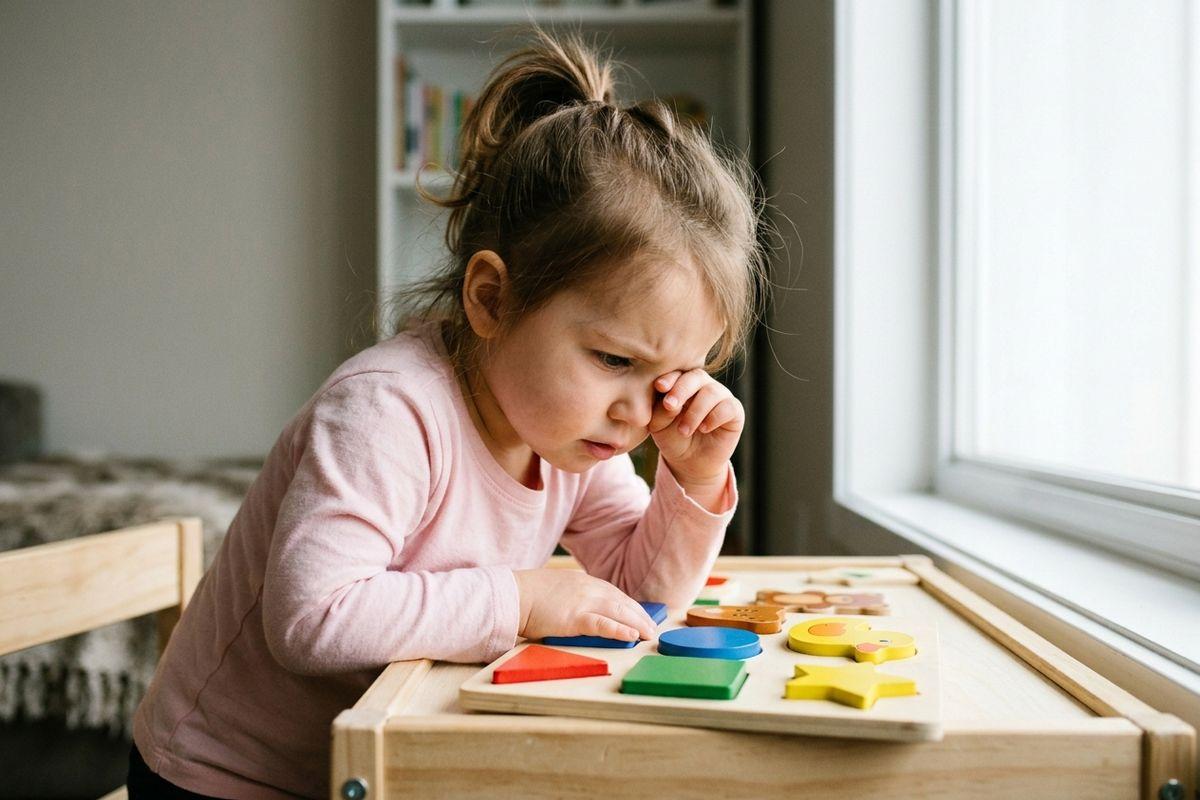
How We Check Toddler Vision Without Letters
Your child doesn’t need to know the alphabet for any of this. We use pictures and shapes she can point to or name, plus kid-friendly lights and handheld tools that feel more like a game than a test.
A quick vision screening at daycare or a well-child visit is helpful, though it can miss vision problems that are still developing. A comprehensive eye exam goes further. Our optometrists look at how each eye focuses on its own, whether the two work as a team, and the health of the eye tissue itself.
Book a morning slot if you can. A rested toddler tends to cooperate better than a hungry one at nap time.
Grove Eye Care Is an InfantSEE Provider
Eye care can begin before a child is old enough to recognize letters or describe what they see. Grove Eye Care is an InfantSEE provider, offering comprehensive eye and vision assessments for infants between 6 and 12 months of age.
InfantSEE is a public health program from Optometry Cares – The AOA Foundation that helps make early eye and vision care part of infant wellness. During an InfantSEE assessment, an optometrist checks areas such as refractive errors, eye movement and alignment, eye health, and family history.
Early assessment can help identify potential vision or eye health concerns while a child’s visual system is still developing. The InfantSEE program recommends a first comprehensive eye examination around 6 months of age.
Learn more about InfantSEE and what to expect from an infant eye exam.
Simple Ways to Support Your Toddler’s Vision at Home
Play does more for developing eyes than most parents realize. Toss a soft ball back and forth, stack blocks, and pull out the chunky puzzles, since all of it gives the eyes practice at judging distance and picking out detail.
Read aloud and let your child follow the words with a finger on the page. Then get outside. Outdoor play gives the eyes a break from close-up screen time, and researchers have linked daylight hours to slower progression of nearsightedness in kids.
Our optometrists at Grove Eye Care see toddlers every week, and we know how to make visits easy for both of you. Book an appointment and find out what your child is really seeing.